Constitutional & Democratic Education
Know your Constitution.
Explore the Constitution, fundamental rights, federalism and institutional accountability.
آئین · جمہوریت
1900
Year the Constitution was adopted
0
Articles
0
Parts
0
Voting age
Fundamental Rights
Rights every citizen holds
Part II, Chapter 1 of the Constitution guarantees fundamental rights in Articles 8 to 28. Select an Article to read it in plain words.
Article 9
Security of person
In plain words
No one may be deprived of life or liberty except in accordance with law.
Summaries are simplified for learning. The text of the Constitution is the authoritative wording.
Federalism
Federal or provincial?
Pakistan is a federation of four provinces, Balochistan, Khyber Pakhtunkhwa, Punjab and Sindh, together with the Islamabad Capital Territory.
The 18th Amendment of 2010 abolished the Concurrent Legislative List, giving the provinces responsibility for many subjects.
The Council of Common Interests and the National Finance Commission bring the Federation and the provinces together on shared matters and resources.
- Defence
- School education
- Foreign affairs
- Health
- Currency
- Agriculture
- Citizenship
- Police and public order
Choose Federal or Provincial for each subject.
Institutional Accountability
No power without a check
The Constitution divides power between Parliament, the Executive and the Judiciary, and gives each a way to hold the others to account. Select a branch.
Majlis-e-Shoora
Parliament
Holds others to account
- Questions, motions and committees scrutinise the work of ministries
- The Public Accounts Committee examines the Auditor-General's reports
- The National Assembly can remove the Prime Minister through a vote of no confidence
Is held to account by
- Voters, at every general election
- The courts, which can strike down laws that violate fundamental rights
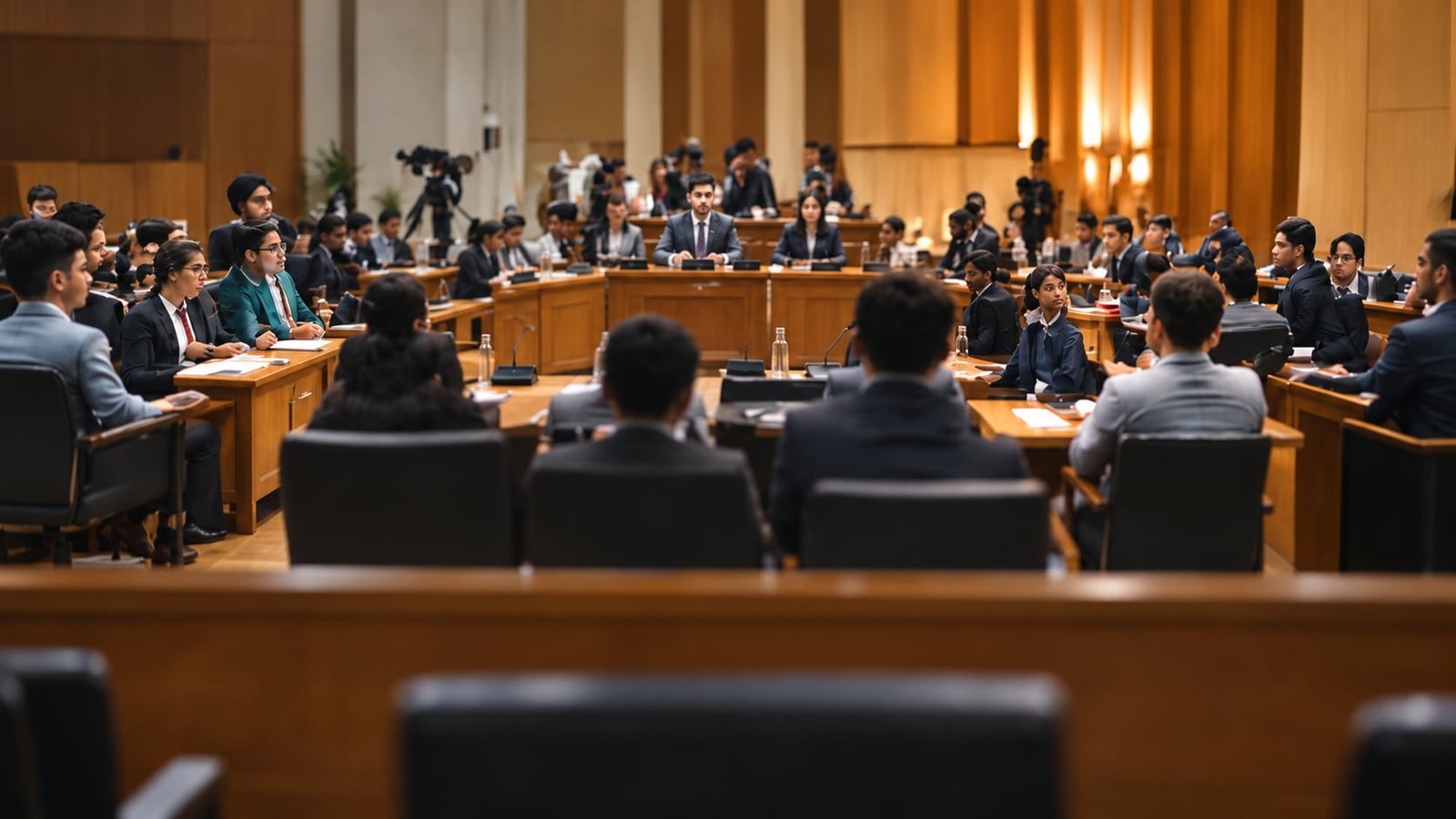
Preparing constitutionally conscious leaders
Become a member of the Public Parliament of Pakistan and learn the Constitution by putting it into practice.